

Close
Pediatric osteopathic manual therapy in Calgary at Ellipse Therapy provides gentle, individualized and evidence-informed care for babies, children and teenagers.
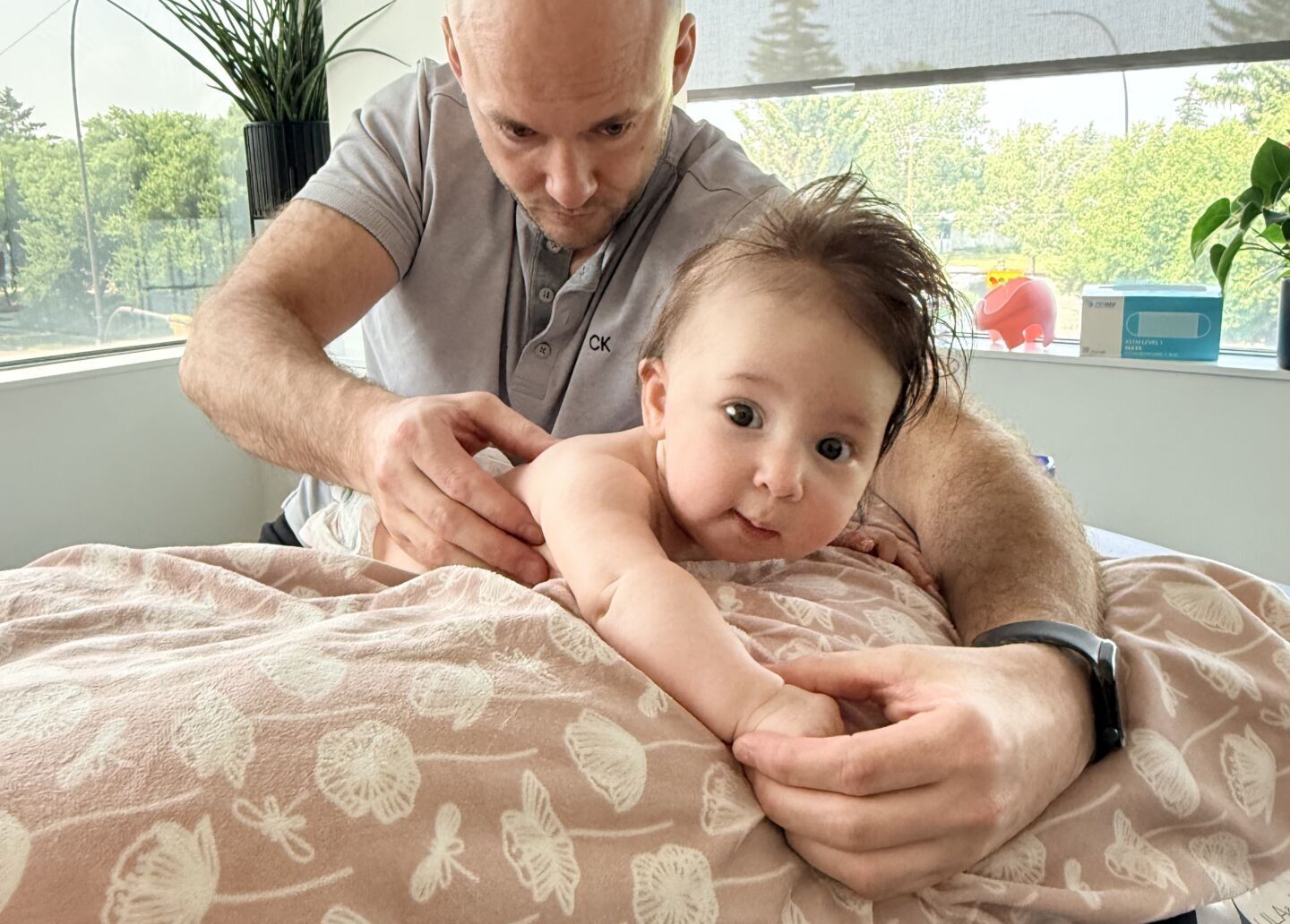
Children’s bodies change rapidly as they grow. At Ellipse Therapy, pediatric osteopathic manual therapy is adapted to each child’s age, development, comfort and individual presentation.
Assessment focuses on relevant movement, mobility and musculoskeletal function. The aim is not to “realign” the body or prevent hypothetical future problems, but to identify musculoskeletal factors that may be relevant to the child’s comfort, movement or function.
For babies, assessment is gentle and age-appropriate. We may assess movement, positional preferences, range of motion and areas of musculoskeletal tension that could potentially influence comfort, positioning or the mechanics involved in feeding.
When breastfeeding or latch difficulties are present, osteopathic manual therapy may be used as an adjunct to lactation care when musculoskeletal factors appear relevant. The goal is not to treat breastfeeding itself, but to identify and address movement or musculoskeletal restrictions that may be contributing to difficulty with positioning or latch.
Ellipse Therapy frequently works alongside lactation consultants and physicians as part of a collaborative approach to feeding concerns.
As children become more active, appointments may address movement-related discomfort, stiffness or musculoskeletal concerns associated with play, falls, activities or changes in mobility.
For teenagers, care may focus on musculoskeletal pain, mobility restrictions, sports-related concerns and discomfort associated with changing activity demands and growth.
Every pediatric appointment begins with a conversation with the parent or caregiver about the reason for the visit, relevant medical history, development, activity and any assessments or recommendations already provided by other healthcare professionals.
The physical assessment is adapted to the child’s age and comfort. Depending on the presentation, we may observe spontaneous movement, positional preferences, symmetry, active and passive range of motion, joint and soft-tissue mobility, and areas of musculoskeletal tension.
For babies experiencing feeding or latch difficulties, assessment may also consider whether movement restrictions, positional preferences or musculoskeletal tension could be affecting comfortable positioning or feeding mechanics.
Findings are interpreted in context rather than assumed to be the single “cause” of a symptom. If something appears outside the scope of osteopathic manual therapy, or requires further medical assessment, we will recommend evaluation by the appropriate healthcare professional.

Gentle, individualized care for babies, children and teenagers at Ellipse Therapy in Calgary NW.